Tag

Beer, Wine and Spirits. Tastings and Travel. News and Events. Classic Flavors from Breweries, Wineries and Distilleries Across the Drinks World.

Showing posts with label Pinot Noir. Show all posts

Tuesday, October 19, 2010

Day 292 Drink: Caretaker 2008 Pinot Noir


Caretaker 2008 Pinot Noir is a Central Coast California wine that is sold at Trader Joe's.

Caretaker 2008 Pinot Noir has a light floral aroma and pours a purple garnet color. The wine has a delicate body, with hints of black cherry and raspberry. Very smooth and drinkable. Not the biggest red you will ever taste, but pretty nice to go along with a roasted chicken.

Tuesday, March 02, 2010

Day 61 Drink: Dr. Konstantin Frank Fleur de Pinot Noir


Dr. Konstantin Frank Winery is one of the most respected labels in the Finger Lakes region of New York. Konstantin Frank came to the U.S. in 1951 from the Ukraine. After spending time at Cornell University's Geneva Experiment Station, Frank established Vinifera Wine Cellars in 1962.

The winery has gained considerable attention for its world-class Rieslings. They also make a very good sparkling wine and a host of other wines worth tasting.

Dr. Frank Fleur de Pinot Noir is a non-vintage wine that pours a nice purple hue. The aroma is fairly young and lively. There is a nice level fruit upfront with fresh cherries dominating the flavor. There is a nice tartness to the finish of the wine.

Tuesday, January 12, 2010

Day 12 Drink: Trapiche Oak Cask 2007 Pinot Noir


Bodegas Trapiche is located in the Mendoza region of Argentina and was named Argentina Winery of the Year in 2006. Trapiche has been making wine for 125 years and you can find their wines in 80 countries.

Mendoza is located in the foothills of the Andes Mountains and produces more than 60 percent of Argentina's wines. Malbec and Tempranillo wines have helped put the region on the world wine map, but you can also find excellent chardonnay and cabernet sauvignon from Mendoza at some very reasonable prices.

Trapiche Pinot Noir is richer and has more dark fruit notes than I expected based on the medium red color and initial aroma. Made with grapes from vineyards at two distinct altitudes, there is ample bright fruit notes. The finish is dry with hints of oak and cherry. Perfect for grilled sirloin.

Tuesday, December 18, 2007

Tuesday Tasting: Six Wines for the Holidays from the Finger Lakes


Tuesday Tasting is a regular feature of Lyke2Drink that explores some of the best beers, wines and spirits on the market. This week we travel to the Finger Lakes region of Upstate New York for six wines perfect for holiday meals.

From the full disclosure desk: I work for Eric Mower and Associates, a marketing communications agency (www.mower.com). We developed a program for the Finger Lakes Wine Alliance called the FLWA Vintners' Roundtable. This virtual tasting is conducted via conference call, linking winemakers and food and beverage journalists. I recently played host to a FLWA Vintners' Roundtable attended by several drinks journalists, including Sean Ludford, Bill Dowd, David Falchek, Cynthia Sin-Yi Cheng and Michael Cervin. You can check out their reports as they appear to measure the objectivity of my tasting notes.

The Finger Lakes region is best known for its riesling, which regularly takes home medals from various competitons. But the region has plantings from a wide array of grapes. It is interesting to see what various vineyards have in the works. The Finger Lakes were originally the home of native Lambrusca grapes, which tend to make better jam and grape juice than wine. French-American hybrids and classic vinifera are now the main stays of the more than 90 wineries in the region.

Chateau Frank 2000 Blanc de Noirs: The late Willy Frank established Chateau Frank in 1985 as a way to leave his mark on the Dr. Konstantin Frank Vinifera Wine Cellars. He would be proud of this methode champenoise wine. Made using 90 percent pinot noir and 10 percent pinot meunier, this pink-hued sparkler has crisp tart apple flavor notes. One of the best sparkling wines from a U.S. producer.

White Springs Farms 2006 Gewurztraminer: Winemaker Derek Wilbur allows skin contact in this Seneca Lake gewurtraminer. "It's the most red of the white wines we make," he says. The skins allow some tannins to balance the flavor. Slight spicy and minerally flavor profile.

Rooster Hill 2006 Estate Gewurztraminer: From Keuka Lake, winemaker Barry Tortolon decided to mix two yeast strains in this wine and the result is a flowery, spicy and fruity white. A solid wine to serve as a cocktail pour or to match with a meal.

Sheldrake Point 2006 Bunch Select Riesling: Winegrower Bob Madill says the presence of Botrytis Cinerea -- Noble Rot -- allowed Sheldrake to create this wine, the fourth vintage they have pressed whole cluster grapes to create a riesling dessert wine. With 8.8 grams of acid and 6 percent residual sugar, this is a well balanced and flavorful wine perfect for concluding a meal.

Anthony Road 2006 Sweet Dream: Made from vignoles, a French-American hybrid, by German winemaker Johannes Reinhardt, about 40 percent of the crop had Botrytis. Reinhardt notes the thick skins of the vignoles stands up well to noble rot. The acid level in the 2006 is slightly higher than a year ago, balancing nicely to the 7.1 percent residual sugar. This is one of my surprise favorite wines among the dessert wines I have tasted during 2007.

Lakewood Vineyards 2005 Port: The Finger Lakes has a different climate than Portugal and the Baco Noir grape was likely not created to make a Port-style wine, but third generation winemaker Chris Stamp said this is "What happens when you leave Baco on the vine long enough." This is the fourth time and first vinatge since 2001 that Lakewood has turned Baco into a Port. Good raspberry and dark fruit tones, with a touch of cocoa.

Friday, November 16, 2007

Hahn Counting on Pinot Noir


Hahn Estates is located inland from Monterey on a hillside looking down to the Salinas Valley. It's beautiful country that produces some very nice wines. We found ourselves at the winery late in the day recently and enjoyed the great view with a few of their wines.

Hahn Estates 2005 Pinot Noir: This Central Coast winery believes so strongly in its pinot noir that it has ripped out 400 acres of cabernet sauvignon to expand its pinot plantings. This is a lush pinot noir with nice deep cherry notes. A great value for a California red.

Hahn Estates 2005 Chardonnay: A hint of peach in the nose, with a nice citrus and apricot flavor profile.

Smith & Hook 2005 Reserve Cabernet Sauvignon: Named for the ranches that make up the vineyard, this red has good tannins and dark purple fruit flavors.

Saturday, November 10, 2007

Olives & Grapes at Pietra Santa


The Pietra Santa Winery dominates the Cienega Valley, which is about 25 miles inland from Monterey Bay. A Spanish mission-style winery building sits in the midst of a a 455-acre estate with grape vineyards and a grove of 5,000 imported Italian olive trees. The nearest towns are San Juan Bautista and Holister, Calif. Pietra Santa is one of only two wineries located in the Cienega Valley AVA.

We were invited to visit the winery as part of writers junket to see how olive oil is produced. We were the guests of the Blackburn family, which purchased the winery a couple of years ago. Winemaker Alessio Carni, who also is in charge of managing the estate olive oil business, hosted a tour of the vineyard, demonstrated the press and ran the group through an extensive tasting of the wines produced at Pietra Santa. The Blackburns, who have been farming almonds in California for many years, were gracious and friendly. It was interesting to pick the olives and see the manufacturing process, then go through a comparative tasting of various olive varietals.

The Pietra Santa Estate Extra Virgina Olive Oil is a blend of 59 percent Franoio, 11 percent Coratina, 24 percent Leccino and 5 percent Italian mix olives. The result is a fresh, somewhat fruity and creamy gourmet oil.

The vineyards at Pietra Santa were first planted ion the 1850s by Frenchman Theophile Vache. Carni, a native of Siena, Italy, has been in charge of the vineyard since 1998. “The limestone soil provides good drainage which helps our vines and we have the mountains and our valley that are perfect for grapes.” Carli says. “The key to great wine is letting the grapes show their true character.”

We sampled the complete Pietra Santa line during our visit, which included a lunch served inside the winery and a dinner at a 100-year-old home on the property. Here are some of the wine highlights from the visit:

Pietra Santa 2004 Sangiovese: Carli uses medium toast French oak barrels to produce a tannin-filled red that has Chianti-like characteristics.

Pietra Santa 2004 Dolcetto: Deep burgundy color, this dry red has ripe fruit and tobacco notes.

Pietra Santa 2005 Zinfandel: A rich deep wine. Medium-dry with cassis and leather notes.

Pietra Santa 2006 Gewurztraminer: Solid floral nose, good level of acidity and citrus flavor notes. Perhaps note as spicy as some gewurztraminers, but very refreshing.

Vache 2002 Pinot Noir: Deep purple from some whole berry fermentation, this wine was aged in French oak and has nice plum and pepper notes.

2003 Signature: A blend of cabernet sauvignon, merlot and cabnet franc, this wine is spicy with a good amount of oak. Nice ripe blackberry notes. Will likely age well for several years.

Monday, June 25, 2007

Great Lakes Great Wines Competition Results


The Great Lakes Great Wine Competition was held recently for wineries in Ontario and the seven states bordering the Great Lakes.

One of the leading Finger Lakes wineries, Dr. Konstantin Frank Vinifera Wine Cellars landed the most golds with six, including a double gold for its Cabernet Sauvignon.

The double gold and gold winners included:


Double Gold:

Black Star Farms Arcturos Fortified Raspberry NV
Black Star Farms Leorie Vineyard Merlot/Cabernet Franc 2004
Chalet Debonne Vidal Ice Wine 2005
Dr. Konstantin Frank Cabernet Sauvignon 2005
Ferrante Vidal Ice Wine 2005
Oliver Winery Creekbend Vineyard Late Harvest Vignoles 2005
Wagner Semi-Dry Riesling 2006

Gold:

Illinois
Pomona Winery Fortified Blueberry NV

Indiana
Oliver Winery Creekbend Vineyards Vidal Ice Wine
Oliver Winery Creekbend Vineyards Traminette

Michigan
Bel Lago Auxerrois 2006
Black Star Farms Arcturos Blanc de Blanc 2004
Black Star Farms Arcturos Cabernet Franc 2005
Black Star Farms Arcturos Pinot Gris 2005
Chateau Grand Traverse Semi-Dry Riesling 2006
Fenn Valley Vineyards Cherry Wine NV
Fenn Valley Vineyards Riesling 2005
Fenn Valley Vineyards Vignoles Reserve 2006
Lemon Creek Snow Moon Vidal Ice Wine 2004
Lemon Creek Sesquicentennial White 2005
Sandhill Crane Chancellor Noir 2003
St. Julian St. J. Chardonnay 2005
St. Julian Cherry Wine NV
St. Julian St. J. Pinot Gris 2005
St. Julian St. J. Riesling 2005
St. Julian Braganini Reserve Traminette 2006
Tabor Hill Cabernet Franc Rose 2005
Tabor Hill Cherry Wine NV
Tabor Hill Merlot 2005
Tabor Hill Classic Demi Sec White Proprietor's Blend NV

New York
Dr. Konstantin Frank Blanc de Blanc 2000
Dr. Konstantin Frank Gewurztraminer 2006
Dr. Konstantin Frank Pinot Gris 2006
Dr. Konstantin Frank Dry Riesling 2006
Dr. Konstantin Frank Cabernet Franc 2005
Fulkerson Cabernet Sauvignon 2005
Hazlitt 1852 White Proprietor's Blend NV
Hosmer Winery Pinot Noir 2005
Hunt Country Semi-Dry Riesling 2006
Hunt Country Vignoles 2006
Keuka Springs Riesling 2005
Lamoreaux Landing Gewurztraminer 2006

Ohio
Breitenbach Vidal Ice Wine NV
Chalet Debonne Chardonnay Reserve 2006
Ferrante Cabernet Sauvignon 2004
Ferrante Chardonnay 2005
Slate Run Red Proprietor's Blend Premblage Reserve 1999

Ontario
Colio Estate Vidal Ice Wine 2004
Mastronardi Vidal Ice Wine 2004

Pennsylvania
Conneaut Seyval & Vidal NV
Mount Nittany White Proprietor's Blend 2006
Naylor Peach Wine NV
Presque Isle Lemberger 2005

Wisconsin
Cedar Creek Vidal Blanc 2006
Trout Springs Winery Sangiovese 2005
Wollersheim River gold 2006
Thursday, March 01, 2007

Oregon Wine Grape Harvest Sets a Record

Vineyards in Oregon had a record harvest in 2006, up 38 percent from the previous year.

According to the National Agricultural Statistics Service, 34,400 tons of wine grapes were harvested in Oregon during last Fall's crush. The new record was the result of a good growing season and newly planted vineyards staring to produce a crop.

Demand for Oregon wine is growing, thanks to the popularity of pinot noir and pinot gris, which form the backbone of the Oregon wine industry.

Saturday, January 13, 2007

San Francisco Chronicle Wine Competition Announces Winners


The 55 judges in the San Francisco Chronicle Wine Competition recently tasted 3,800 wines from 1,573 wineries in 20 states before handing out medals, awarding best in class honors and determining the Sweepstake Winner awards for the best sparkling, white, red and dessert/specialty wines.

The Sweepstake Winners for 2007 are:

-- Sparkling Wine: 1999 Roederer Estate Brut, Anderson Valley
-- White Wine: 2006 Geyser Peak Winery Sauvignon Blanc, California, and 2006 Windsor Vineyards Gerwurztraminer, Alexander Valley
-- Red Wine: 2005 Flying Goat Cellars Pinot Noir, Rancho Santa Rosa, and 2004 B.R. Cohn Winery Petite Sirah, North Coast
-- Dessert/Specialty Beverage: 2005 Navarro Vineyards Late Harvest Muscat Blanc, Anderson Valley.

Sunday, December 31, 2006

Why Wine Lists Look the Way They Do

When it comes to food and drink, Americans are a fairly predictable lot. There's a reason why hamburger, chicken and taco fast food joints congregate around the off ramps of interstate highways across this great land. We appear ready to accept an unlimited number of TGI Friday's, Chili's and Ruby Tuesday locations, but good independent restaurants struggle to make it from month to month. Even in great restaurant cities -- I just returned from one, Charleston, S.C. -- there are an abundant number of places that think just about everything must pass through the deep fryer on its way to the table.

You cannot fault the restaurateurs. We support these places by buying what they sell and we do the same thing when it comes to the selections that they offer up in the form of draught and bottled beer, wine lists and call brands for liquor. Just look at America's five favorite wine varietals according to ACNielsen: Chardonnay, Merlot, Cabernet Sauvignon, White Zinfandel and Pinot Grigio. Not a Riesling, Zinfandel, Gewurztraminer, Pinot Noir or Syrah among the top five? That says plenty when you talk about diversity and range of flavor.

Well I've made a resolution for the New Year and plan to follow it closely. If a restaurant decides that all I should be offered to drink is a house selection of mundane wines from a single mega vintner or the five beer taps should only include three light beers and two pale lagers, I'm going to order ice water with a lemon wedge. Doing anything other than this reinforces the poor bar management of the restaurateur by rewarding them with a beverage sale. I've even tried asking a few bartenders recently why their place ties up so many taps for beer that basically all tastes fairly the same. To a barkeeper the answer I've been given is a "I don't know, I don't do the ordering." I'm not looking for these places to suddenly start exclusively selling Belgian ales, I'd just like a little variety and maybe a local product or two. I recognize there are customers who want light beer, but why do they get three taps and the rest of us zero?

So the next time you visit a restaurant and ask them what they have to drink, if the wine list or beer list sounds like a generic airport lounge look the server in the eye and say: "That's all you have? I'll take an ice water and lemon." Perhaps if they start realizing they are losing sales (and tips) because of boring beverage offerings, things might change. Our taste buds can only hope.

Happy New Year!

Saturday, September 02, 2006

Oregon State Fair Wine Awards Announced


The results of the Oregon State Fair Wine Competition were announced last week. A total of 68 vintners out of Oregon’s 350 commercial wineries entered 273 individual wines in 49 different varietal categories.

The judges handed out nine golds 48 silver and 110 bronze awards. The gold winners were:

Airlie 2003 White Riesling -- Willamette Valley (Best of Show and Best of Classification)

Chateau Lorane 2004 Viognier, Oregon

Vitis Ridge 2005 Early Muscat, Oregon

Vitis Ridge 2004 Pinot Noir, Oregon (Best of Classification)

Winter's Hill Vineyard 2004 Pinot Noir, Dundee Hills

Griffin Creek 2002 Syrah, Rogue Valley, Southern Oregon

Chateau Lorane 2003 Syrah, Rogue Valley

Zerba Cellars 2004 Syrah, Columbia Valley (Best of Classification)

Eola Hills Vin d'Or 2004 Sauvignon Blanc Late Harvest, Oregon (Best of Classification)

Tuesday, August 15, 2006

Tuesday Tasting: Reds from the Southern Hemisphere


Tuesday Tasting is a regular feature of Lyke2Drink that explores some of the best beers, wines and spirits on the market. This week we're taking a tour of red wines from south of the Equator.

Not long ago any serious discussion of red wine started and ended in one of four places: France, Italy, Spain or California. The wine world is pretty traditional in its thinking and no other producers were giving real cause for a change in the accepted wisdom.

That was then, this is now. A number of circumstances came together to leave a crack in the door and vineyards from other regions and they exploited the opportunity. Vineyards located south of the Equator are perhaps the most successful in crashing the party with shiraz, merlot, cabernet sauvignon, malbec and other reds that offer exciting alternatives. Wineries principally from five Southern Hemisphere countries -- Australia, Chile, South Africa, New Zealand and Argentina – have the traditional producers scrambling to try to match quality and price.

What changed to rock the world of red wines? Like most major market changes, it was no single event. A grape shortage in California in the 1990s created an opportunity for Australians to help consumers discover that good red wine need not cost $40 a bottle. Chilean vintners soon would prove it need not cost $15 a bottle. About the time this lesson was soaking in, media reports surfaced of thousands of bottles of fake Italian Chianti and French Burgundy being discovered on the market, casting doubt in the minds of some consumers about the authenticity of what they had been drinking. The French made their situation more difficult when they stumbled politically in dealing with America. The U.S. Dollar faded against the Euro during the last few years, making price an issue for the higher end French and Italian labels. Then grape harvests in several of the major red wine regions reached near record levels, resulting in gluts in the market. The Australian wine surplus has consumers in that country feasting on $2 bottles of wine at the moment.

No longer does anyone question a bottle of Australian red wine brought to a dinner party. Consumers find adventure in trying a red from South African, a country that not long ago was virtually banned as a trading partner with the U.S. Southern Hemisphere winemakers have uncovered four keys that are helping them gain market share: value pricing that encourages trial; availability of popular varietals, such as merlot and shiraz; easy to understand labels; and good wine that matches what the casual wine drinker is looking for in a red.

Simply put, for a large chunk of American wine consuming public it is easier, cheaper and more enjoyable to drink an Australian wine than a French wine. They don’t need to try to figure out the mysteries of the Bordeaux, Burgundy or some other appellation. The labels don’t require experience with French pronunciations. If they are looking for a merlot, it says so on the label. For most entry to mid-level wines, they will likely pay less for a wine of similar quality. And, many experts argue the wine is closer to what the typical American palate wants in a wine experience. Besides, Australians are viewed as fun. The French? Well, they’re French.

Here's a quick tour around the Southern Hemisphere wine world:

Argentina: The wine industry in Argentina has been primarily focused on domestic and South American markets, so it can be hard to find an Argentine wine in the U.S. Most people are surprised to learn that Argentina out produces Chile and is fairly close to the U.S. in total output of wine. The first grapes were planted by Spanish settlers in the mid-1500s. Investment in the industry during the 1990s has pointed vineyards in the direction of internationally favored grape varieties. The results so far include some interesting blends, such as Cabernet Sauvignon-Malbec-Merlot. Wine to try: Argento Malbec or Cantena Cabernet Sauvignon.

Australia: The first vines were brought to Australia in 1788. Several waves of European immigrants brought more vines and wine making experience. Equally important is that during the last several decades Australians have heavily invested in winemaking infrastructure and now rank among the most modern of any wine producing country worldwide. The technology, facilities and automation, coupled with some the best growing conditions on the planet, have meant abundant crops and quality wines. Tax incentives have caused over production and price cutting, which favors the consumer for the moment. Reds from the Barossa Valley are among the world’s best. Shiraz, an old world grape called Syrah in Europe, is Australia’s signature. Cabernet Sauvignon and Merlot also do well down under. Wine to try: There are plenty of fine Australian reds, so it is difficult to go wrong. A good bet is one of the reds from Penfolds, which can range from the affordable to the pricey. Each is worth what you will pay for them.

Chile: Grapes were first planted in Chile by Spanish missionaries in the 1500s. No one is sure how much of the production went towards sacramental wines and how much was for general consumption, but centuries would pass before the next big evolution in Chilean wine. In the 1800s wealthy landowners began importing French vines and French winemakers. When phylloxera and other disease wiped out vines in Europe, Chile’s vineyards were not harmed. Political difficulties during much of the last century slowed the emergence of Chile as a wine producing powerhouse, but foreign investment arrived to bolster wine making in the country. Chile is recognized as a value wine producing region, but prices for some labels have been on the rise as the reputation for quality grows. Cabernet Sauvignon, Merlot, Pinot Noir and Carmenere are the reds to look for from Chile. Wine to try: Santa Ema Reserve Merlot says quite a bit about the quality wine being produced in Chile in a package priced around $10.

New Zealand: The first vineyard on New Zealand was established in 1835. It was not until the 1980s that New Zealand started to get noticed on the international scene and mostly for Sauvignon Blanc and other whites. About 75 percent of New Zealand’s wines are white, but Pinot Noir, along with Merlot and Cabernet Sauvignon, from New Zealand are worth trying. The Hawkes Bay, Otago and Malborough areas show the best promise for reds. Wine to try: Felton Road Pinot Noir is a very fine red wine.

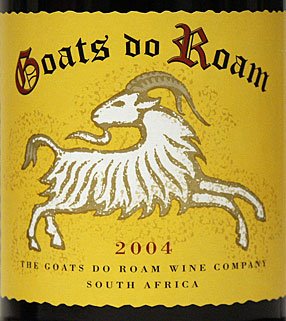
South Africa: The vineyards in this country were first established in the 1600s, but went through significant development under the British during the 1800s because wars made Continental wines difficult to import to the United Kingdom. Ignore for much of the last century, South African vintners did their own thing. In addition to Cabernet Sauvignon, Pinot Noir and Merlot, South Africa produces the Pinotage, a blend of the Pinot Noir and Cinsault grapes. Wine to try: Goats do Roam, a tongue in cheek poke at the French Rhone reds, is a very affordable blend of pinotage, shiraz, cinsault, grenache and carignan. For a little more, try Warwick Estate Three Cape Ladies, a blend of cabernet sauvignon, merlot and pinotage.

Tuesday, August 01, 2006

Tuesday Tasting: Six American Wines


Tuesday Tasting is a regular feature of Lyke2Drink that explores some of the best beers, wines and spirits on the market. This week we taste a few American wines.

In my neighborhood on the outskirts of Charlotte, N.C., where we relocated to last year from Upstate New York, we were happy to find a wine dinner group that meets about once a month. My wife, Sandy, and I hosted the group a couple of months back. Often these dinners have some type of theme. We decided to make our event an "All-American Picnic," with wines from across the United States. We purposely avoided California (it had been covered the previous month) and Oregon (one of our neighbors is from that state and was planning an all-Oregon evening.)

Our goal in pulling together the wines was to try to showcase some great vineyards and prove that America's winemakers are doing some pretty incredible stuff in some pretty surprising locations. We served six different wines: two sparkling wines from the same vineyard, two whites and two reds. It was not hard to find wines that we would be proud to serve in our home or order out at a special dinner. All it required was a little research and a couple of tasting session -- which is never an inconvenience. Here are my tasting notes for the evening. If you get the chance, I recommend that you try these wines.

Gruet Blanc de Noirs N/V: Berry nose and creamy texture. Hints of wild strawberries in the palate. 75% Pinot Noir, 25% Chardonnay. NY Daily News “Best Sparkler Under $20.” $12. Gruet Brut N/V: Full bodied, with green apples and citrus in the flavor profile. Slightly toasted finish from barrel aging. 75% Chardonnay, 25% Pinot Noir. Wine Enthusiast 89 pts. “Top 50 Value.” $14. Gruet Winery is located near Truth or Consequences, N.M., at 4,300 feet above sea level so that cool nights moderate scorching days in the vineyard. Founded in 1984 by Gilbert Gruet, operator of the Gruet et Fils Champagne house in France since 1952, the winery produces 80,000 cases of still and sparkling wines.

38 Vines 2003 Chardonnay: Medium body dry wine with hints of apples and lemons, nicely balanced by oak barrel aging. Double Gold at the North Carolina State Fair Competition. $13. Old North State Winery is a cooperative of 38 vineyards in North Carolina that operates a winery in Mount Airy, which formed the basis for the mythical TV town of Mayberry. The 2003 vintage is the first released under the 38 Vines label.

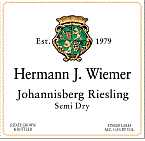
Hermann J. Wiemer 2004 Semi-Dry Riesling: Semi-dry wine with a floral and honey nose, with hints of pears, peaches and apples in a crisp flavor profile. Spatlese Rhine-style wine with 2.3% residual sugar. $16. Hermann J. Wiemer Vineyards is run by a German-born winemaker whose family has been producing wine in the Mosel Valley for 300 years. Founded in 1979 in New York’s Finger Lakes, it was named New York Winery of the Year in 2003.

Gordon Brothers 2001 Syrah: Plum, fig and candied fruit flavors that give way to peppery accents and a hint of smoke. The vines benefited from a mild winter and the summer was dry with average temperatures. 91% Syrah, 9% Merlot. Aged for 17 months in French oak. Wine Spectator 91 pts. $20. Gordon Brothers Winery is located in Washington’s Columbia Valley, not far from Oregon, at the same latitude as Bordeaux. Jeff and Bill Gordon planted their first vines in 1980 and released their first wine in 1985.

White Hall 2002 Monticello Cabernet Sauvignon: Ripe fruit that starts with a black cherry and cassis aroma and gives hints of anise and spice in the palate. 81% Cabernet Sauvignon, 10% Cabernet Franc, 9% Tannat. Aged in French and American Oak. Virginia Governor’s Cup Silver Award. $14. White Hall Vineyards is located about 10 miles from Charlottesville, Va. Established in 1991 by former California vintner Mike Champ, the vineyard has twice been selected as the Virginia Winery of the Year.